Warning: This Essay contains minor and major spoilers from Phase 1 of The High Republic and possible spoilers for Phase 3 of The High Republic.
[Essay of the Week Contest] Submission: Week 72
Word Count: 4470
If you like this essay, be sure to add another like to the submission post on the contest page!
Introduction
We were told right from the start of the High Republic Initiative that this era of Star Wars is a Camelot, a golden age for knights errant looking to help people and sit at a round and equal table. Arthur, his knights and the mythos of that world have long captured the imagination in many forms, and especially in recent decades, have been reinterpreted and recontextualized into a variety of forms. The effort seen in the High Republic Initiative is one of the more unique interpretations, one that openly embraces the flaws of its main trio of characters, and plays with many parts of their inspiration accumulated over the years, alongside interesting takes on their main villains. In this essay, I will show the ties between the Arthuriana of the past and recent years, and the High Republic, and hopefully give everyone a greater understanding of several main characters as a result.
The Golden Boy
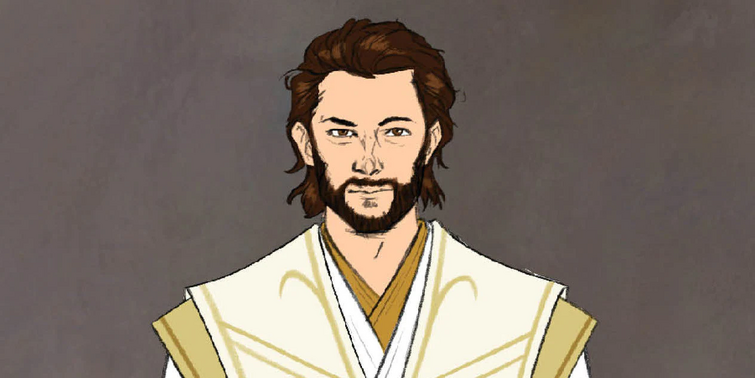
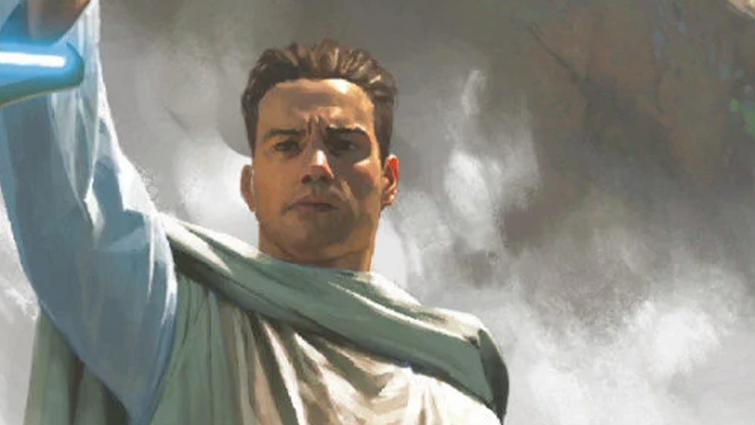
We should begin with the allegory to Arthur himself, Stellan Gios, the one who stands above the rest. Stellan is a prodigy, being one of if not the youngest member of the Jedi Council in this period, and raised to high status because of it. He also trained his own prodigy, the extremely young Vernestra Rwoh, who became a full-fledged Jedi at 15, acquiring a Padawan of her own soon afterward. Stellan is brave, selfless, and possesses many of the ideal traits for a Jedi shown in the events of books like The Rising Storm, and the memories Vernestra has of her former master. As Phase 1 carries on, Stellan is also a public face to the Jedi, commonly speaking on the Holonet or appearing in coverage of major events, a role commented on somewhat acerbically by Orla Jareni in The Fallen Star as she feels he falls too easily into a public persona. All of these traits show parallels to Arthur. Like Stellan, Arthur is the public face of his entire mythos, and a prodigy in his own right for pulling the sword from the stone, anvil or lake at an age that makes him barely a teenager by our modern standards, if not younger in some versions of the story. Arthur is also a legendary warrior in most tellings of his mythos, his earliest tales having him conquer all of the British Isles, parts of Scandinavia and Gaul, before preparing to march on Rome itself. However, later versions of Arthur lean into more negative aspects, and the same is true of Stellan at the end of his journey.
In The Fallen Star, Stellan Gios and multiple other Jedi are trapped onboard Starlight Beacon, and while they don’t know it, are all being influenced and unbalanced by the Nameless set loose on the station by the Nihil. Because of this negative influence, bursts of anger are not uncommon, and personal fears or internal conflicts are severely amplified to the detriment of many Jedi. For Stellan, we get an unearthing of long-buried enmities and feelings toward his closest companions, Avar Kriss and Elzar Mann. We see his hostility toward Avar pushed to an extreme, to the point he revels in relieving her of her position as Marshal of the space station. The two had slowly grown apart throughout the past year, as seen in terse exchanges in the first High Republic Marvel comic series, and the Trail of Shadows miniseries, but this action is a whole new level, amplified by the presence of the Nameless. Further reflections by Stellan on Elzar, with Elzar present in the room, show how isolated Stellan felt when the three of them were younger. Where he was the responsible one, the golden boy, with great expectation upon him, Elzar was the one who got to do fun things, explore and experiment, being reprimanded but otherwise going free. Avar enabled Elzar to a degree and the two of them fraternized quite close, something which also seems to promote anger in Stellan. Whether Stellan has feelings beyond friendship for Elzar is a question for another day, but it is undeniable that strong, negative emotions are attached to both of his close friends, yet Stellan kept them hidden all of these years. He also feels out of control of his own life, the path of it charted for him by his nature as a prodigy, and following The Rising Storm, a symbol of the Republic for his reaction to Lina Soh’s grievous injuries. As a result of this pre-charted course, Stellan is left feeling powerless, a feeling reinforced by the Nihil’s brutal attack on the Republic Fair, and by the chaos that takes place in The Fallen Star. Because of that, he seeks out his own methods of control, building for himself his own kingdom one might say, in his new, private office on Starlight Beacon from which he fires Avar Kriss. But, the great irony is that his efforts to control the situation he finds himself in fails, and he plummets down like a falling star though not without one last act of sacrifice.
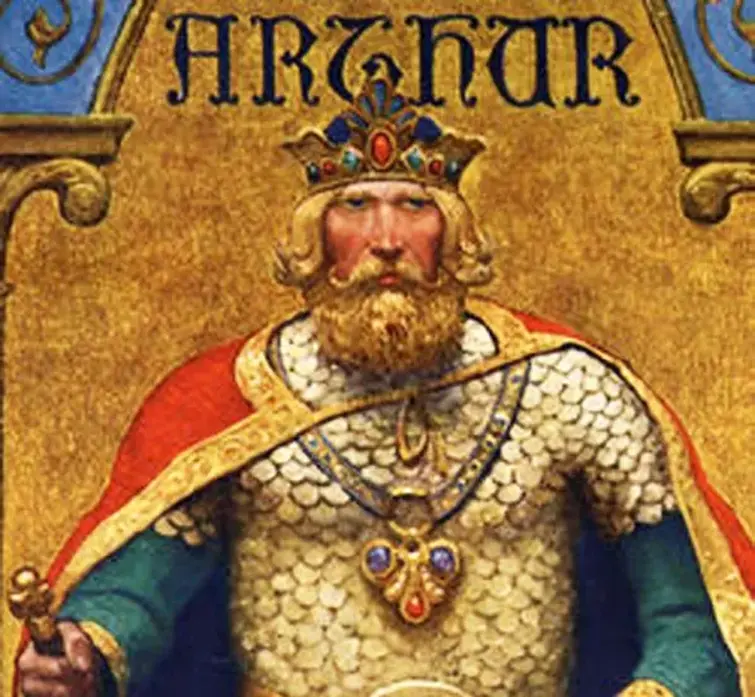
The ties to Arthur based on these negative emotions may initially seem somewhat strange to people familiar with the character, but just as he has a brave, heroic, and selfless side, Arthur also has a darkness to him, especially in more modern remixes of the mythos. To start, Stellan as shown here connects back to the Arthur of the French romance stories created from the 12th century onward. In these and later works influenced by them, once he is on the throne, Arthur becomes something akin to a figurehead. He doesn’t engage in conflicts with other kingdoms, he doesn’t fight other knights in tourneys, he is a prodigy constrained to the throne of his birth, and made to watch as others go on their epic quests, and experience so much more than him. We can also compare Stellan’s response to the Nihil, as seen through the eyes of Avar and the Jedi on Starlight Beacon, to the Arthur of these later stories. Stellan is insistent on slow, methodical efforts against the Nihil, and keeping themselves back as much as possible, without a major commitment of their forces, as well as trusting prior information despite local efforts based out of the Beacon. This causes an open argument with first Avar, and then Keeve Trennis, who feel Stellan isn’t allowing the Jedi to do their jobs. This leans into Arthur’s role as the inactive king, the man who only paled when hearing of the affair of Lancelot and Guinevere, and went to bed for a nap after a feast. In equal parts, Stellan embodies the positive and negative traits of Arthur, the early, energetic warrior with significant power, and the overcautious, quiet, almost absent, king with little direct involvement seen in later texts.
The Water-born
Elzar Mann may seem like an odd pairing for the character of Lancelot, but to say the connections are deep, and even more direct than that of the likes of Stellan and Arthur, is an understatement. First, there is the shared imagery of water associated with each character. Lancelot has such a connection due to his formal title, Lancelot du Lac, as he is often portrayed as being raised by the Lady of the Lake, sometimes an act to save his life, other times at the request of his family if not parents. Elzar, meanwhile, has his unique view of the Force, seeing it as a vast ocean. There is also a copy of his mind preserved in an ocean of fungus, discovered by Luke Skywalker likely many decades after Elzar first found the unique sea. A minor connection between both characters that can also be made is the motif of being taken away by a powerful person to a place of safety, where they rapidly develop their natural gifts. We have yet to learn the origin of Elzar, so it is possible this tie could be made even more direct should we ever learn more information about the Seeker who took Elzar into the Jedi Order. Another note to make is Elzar’s role as the Lancer in the trio of himself, Avar and Stellan. He is the maverick, the jokester, the irreverent character always willing to push boundaries, yet always a friend to those who earn his trust and close company. This role is thus a direct allusion to Lancelot, by the similarity in sound and the role Lancelot himself often plays in adaptations of the Arthurian mythos.
The next parallel we have relates to the aforementioned “pushing of boundaries” Elzar engages with frequently. In The Rising Storm and The Fallen Star, we see the more sexual side of Elzar in full swing, as well as in Light of the Jedi, due to his close proximity to former lover Avar Kriss. It bears repeating here, as anywhere when it comes up, that the Jedi are not a celibate order. They can, and have, had relations with other people. The problem always tends to come with the issue of attachment. Elzar and Avar were once quite intimately close, and it is clear he still struggles with his attachment to her, despite Avar being the one to put it aside some time ago, and him following suit for the sake of their friendship. There are significant ties between this dynamic and that of Lancelot with Guinevere. The relationship the pair has is across the spectrum in many different interpretations of Arthuriana, but overall, it often shows the pair having an instant, passionate connection which while sometimes consummated or acted on before it is then left dormant for some time as they both attempt to break it off. This never works, and ultimately they always come back together. Here, though, is where the more modern interpretations of the story come into play. Sometimes, the trio of Arthur, Lancelot and Guinevere are a throuple of some alignment, other times there is emotional or sexual tension, but it is effectively diffused, and other times, there are unresolved issues from the ending of the Lancelot-Guinevere relationship by one or both parties. The High Republic firmly rests in this final camp, as when Elzar, after a horrible vision of the coming fall of the Jedi, tries to drink the images away, and then makes a pass at Avar, she firmly rebuffs him, leaving him ashamed at his actions, but also hurt about her rejection due to them spending weeks working together closely to combat the threat of the Great Disaster.
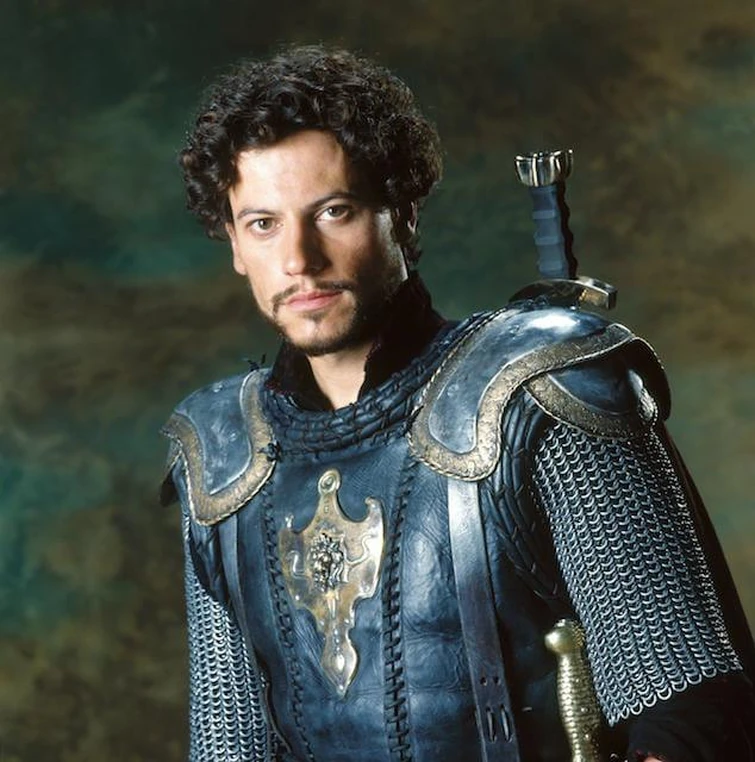
It is now when Elzar’s ties with Lancelot’s “madness” come into play. Following the evening mentioned above, Elzar begins to spiral, drawing more and more from darker emotions for his power, which comes to a head at the Republic Fair. Out of place from his assigned position after a romantic fling with the Fair’s main organizer, a substitute for Avar Kriss after he learned she wasn’t coming to the event, he wakes up to watch as the Nihil begin their assault, and he angrily leaps into action against them. He draws from the Dark Side for truly momentous actions in the Force, his power a beacon to other Jedi flying above in their Vectors, but also a source of destruction against the attacking Nihil. Ty Yorrick helps to steady him, and he later goes on an extensive retreat to re-center himself in the Force. Despite this effort, in The Fallen Star, we see it has not entirely worked, as in a spike of rage, he attacks Chancey Yarrow and brutally bisects her thinking she is a Nihil saboteur while remembering all of their past actions against the innocent and other Jedi. While he is partially right that Chancey is part of the Nihil, and a horrified Nan actively increases his guilt before running off, Chancey was actually attempting to stop the plummeting state of the station. If Elzar had stopped and confronted them verbally, he might have learned that, but instead his manic rage overcame him, and he attacked. This deep, blinding rage and “madness” directly ties him to Lancelot’s dark side. Lancelot’s own bouts of madness are something often brought on by his actions with women, sometimes the result of him and Guinevere breaking it off, other times after he feels he has betrayed the love he has for the queen after sleeping with another woman, and sometimes he just breaks down. We can see how Elzar’s own descent from his normal state of being is tied into this element of Lancelot’s character. Lancelot’s rage, meanwhile, is a trait sometimes present and sometimes not, though tends to explain or be used to explain how he fights in certain situations. For instance, he fights extremely hard and aggressively whenever Guinevere is in danger, even killing other Knights of the Round Table and members of their family who get in his way during events near the end of the Arthurian tales, at the beginning of the fall.
We can also see that Elzar mirrors elements of Lancelot’s role of being the instigator of the fall of Camelot. In the Arthurian mythos, the fall is the general collapse of Camelot’s order after the affair of Lancelot and Guinevere is discovered. Various different versions have a range of events that serve as the catalyst, but often center on Lancelot’s killing of other knights in defense of Guinevere, and the failure of reconciliation that follows. The High Republic obviously doesn’t have Elzar Mann killing fellow Jedi Knights in the name of Avar Kriss, but we can see shades of parallel in looking at the overall flow and feeling of events. As mentioned earlier, Elzar Mann falls into a dark episode at the Republic Fair in The Rising Storm, but comes out of it, and tells Stellan Gios about his struggle. The Council member tells his friend that he will then help him to work through this issue, but this does not come to pass. Instead, The Fallen Star shows us that Orla Jareni has taken up the role at Stellan’s request, with she and Elzar living a rather isolated, monastic life by the sea of an ocean world as they work through his struggles. In short, he is “sent away” and plays little active role in affairs of the wider Jedi Order. When he returns however, he finds that a huge rift has opened up between Avar and Stellan, and the Starlight Beacon, a gleaming white tower, a beacon of hope to all around it, is being corrupted by a hidden threat. He is unable to stop this threat, and even accelerates the plummeting of the Beacon by killing Chancey Yarrow, causing his friend Stellan to stay behind, and keep the station from causing extensive damage to the world below them. So, while Elzar escapes, the Beacon as Camelot crashes into an ocean, which swallows its flaming wreckage. Without Elzar present, the rift between Stellan and Avar was allowed to grow, his role as mediator and friend absent due to his own struggles. The fall is partially his fault as a result, the choice of small actions made months, if not years earlier, resulting in the unwinding of the once tight-knit trio, and especially at the end, the termination of one possible saving grace for the plummeting station.
Sir Guinevere and the Green Twi’lek
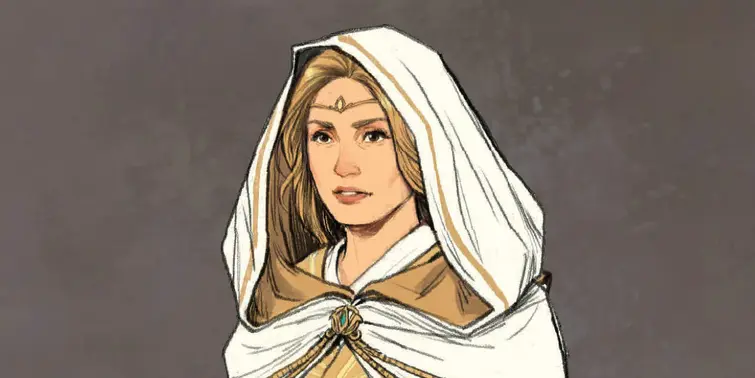
The most difficult allegory of those in this essay is the one made between Avar Kriss and Guinevere. The character of Guinevere, in its medieval and early modern iterations, lacked character, or an arc of her own. She was often merely the woman raised above the rest by her beauty and courtly skills, sought after by Lancelot despite her marriage to Arthur, and often a damsel in distress, captured by enemies or part of some elaborate plot by a rival. She could have wit in some of her dialogue, but overall, these characterizations are what remained consistent. Avar Kriss does not fit many of these elements, and her character instead largely refers to the more modern interpretations of Guinevere, which often give the character agency and often her own weapon or fighting role in the story as something far different than a damsel in distress. However, there is one unique connection between the characters from an unlikely source. A notable piece of Arthuriana is the musical Camelot, with a total of some 20 songs. Guinevere participates in singing, if not solos, almost half of them, for a total of eight, while a ninth is sung all about her. Avar Kriss, meanwhile, views the Force as a song, and connects to other Jedi on that level when she enters her state of “battle meditation” to unite them so they can share their strength. It is a meta parallel, but an intriguing one nonetheless.
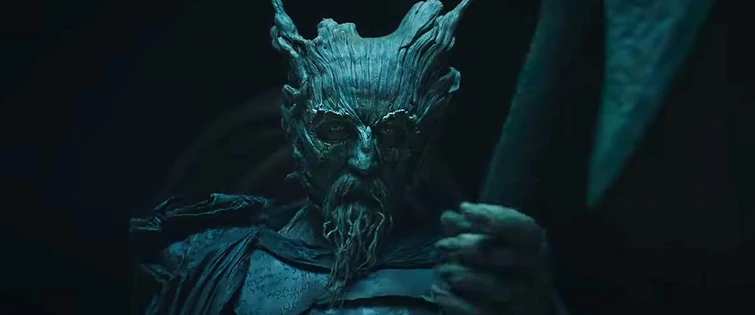
However, as the title to this section alludes, Avar Kriss isn’t just an allegory to Guinevere, she also fulfills the role of Gawain in his most significant story, his quest against the Green Knight. To explain more, Avar’s two main focuses post-Great Disaster and Light of the Jedi are dealing with the Drengir, followed by her hunt for the Eye of the Nihil, who the Republic believes is Lourna Dee. Her relentless push across the galaxy, delving into a forgotten sector of space to track down the Root Mind, followed by her singular goal in tracking down Dee, mirrors the far-reaching search Gawain has to undergo to find and face the Green Knight. The Green Knight himself also has dual parallels to both the Drengir and Lourna Dee. On the Drengir side, the Green Knight has often been associated with plantlife, due to his coloration, the holding of a holly bough when he first arrives at Arthur’s court, and the locations he is found. In his normal human form, his castle is located in a dense forest, and the Green Chapel where he and Gawain finally meet again is a cavern within an earthen mound. The Drengir are malevolent plant life, and there is also a connection to the Green Chapel, as the Drengir are seen hiding underground in The High Republic (2020) series from Marvel.
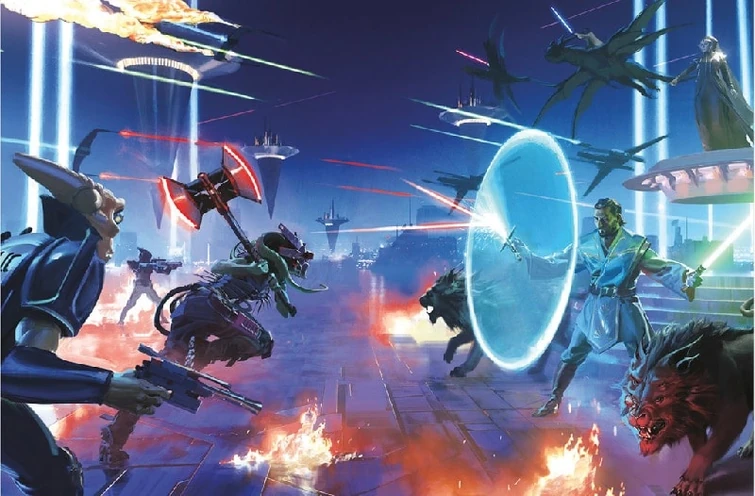
The ties between the Green Knight and Lourna are more numerous however. For starters, they share a love of oversized weapons, particularly giant axes. For the Green Knight, is it the tool used to behead him, and later used to intimidate Gawain in the Chapel, while for Lourna it is one part of her varied arsenal. Despite the fact she uses multiple weapons, she is still depicted wielding it most prominently in The Rising Storm’s collector’s edition book cover in her charging attack at Lina Soh, and in a smaller way, briefly, in the audiodrama Tempest Runner, which tells more of her story. Ultimately, the visual of a green-skinned individual wielding an ax is strong within Lourna. Another parallel between the two are the many lives both characters live. The Green Knight’s head is entirely cut off, yet he lives to challenge Gawain another day due to an enchantment, while Lourna Dee effectively fakes her own death, baffling Republic officials and the Jedi when she returns to cause more chaos. Further connections exist between the Green Knight and Lourna in their wholesome family lives. The Green Knight is merely an enchanted man, made so by Morgan Le Fay, and has a wife and servants at his manor which he seems to treat well. These people in turn respect him and his guest Gawain when he arrives. Lourna’s own healthy life is deeper into her background, which reveals she was once part of the upper class, with a wider family and considerable power due to her father leading their colony. She ultimately lost this, but those events still shape her to be who she is when Avar finds her.
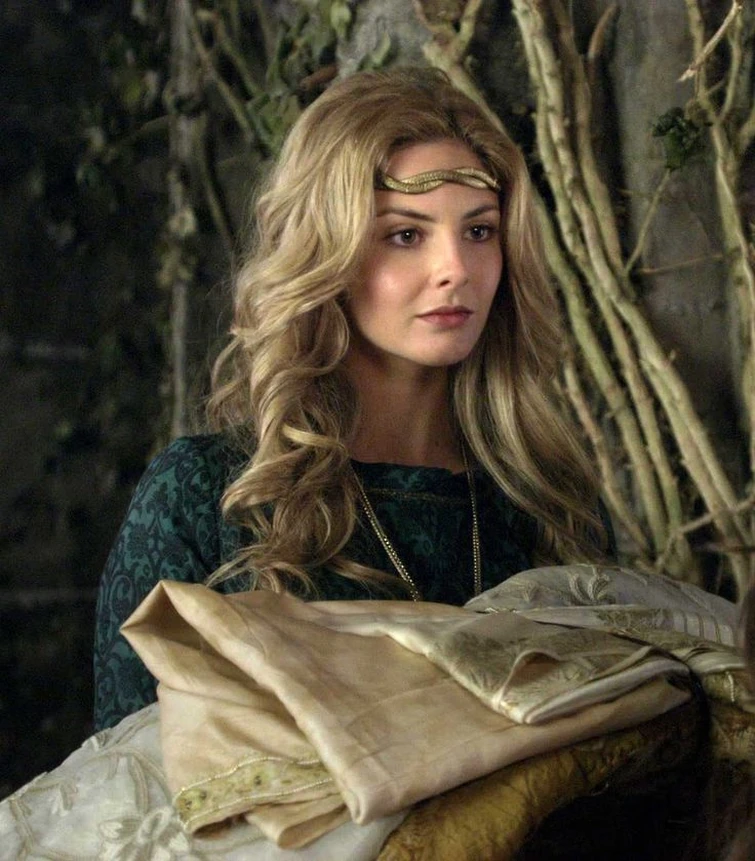
Indeed, the Green Knight and Guinevere are also deeply tied together in the story which bears his name. The entire affair is an elaborate plot by Morgan Le Fay to try and scare Guinevere to death, which fails to work. One could imagine that this story in the High Republic Initiative is a modern retelling of that tale, where rather than Gawain being the one to step up, and confront the Green Knight, Guinevere does it herself and seeks him out once his miraculous revival occurs. The roles of Avar and Lourna line up, especially when one considers that Marchion actively allows the Jedi and Republic to think Lourna was the Eye, and allows her to serve as a distraction for Avar while he enacts his plans in the background. On that topic however…
Triple M: Morgan, Mordred and Marchion
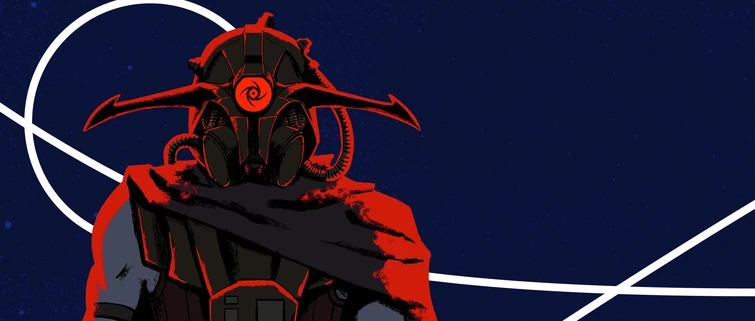
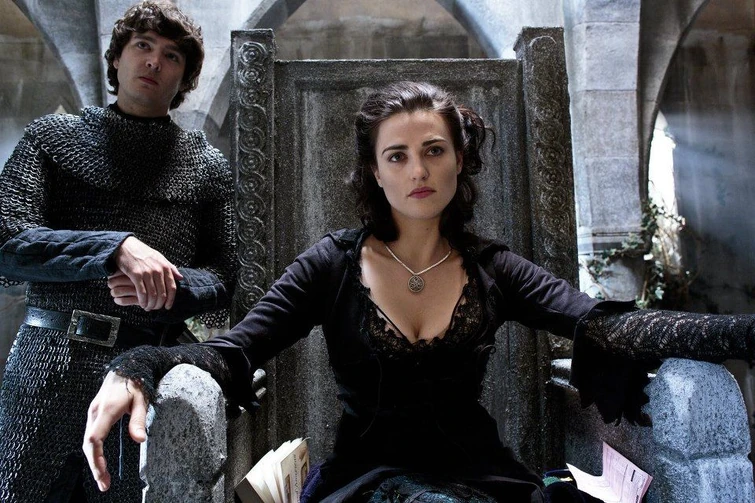
Marchion Ro is a clear parallel in the High Republic era to the two forces from Arthurian legend with an M-based name who seek to take down Camelot. Mordred and Morgan are deceitful, dark, and malevolent, but also eloquent, cunning, precise, mysterious, and seductive in part or whole across their various depictions. Marchion is cut from the same cloth, working in the background to pull invisible strings, seducing a powerful Senator of the Republic to his bed and using her to enact his schemes, while also controlling others through carefully planned betrayals that let him seize full control of the Nihil from the Tempest Runners that were such a problem for his father. There is also the fact that Marchion shares Mordred’s origin as a product of a great, hidden sin or painful deed. Marchion’s family backstory has so far only been partially revealed to us, but if one chooses to think Maarda Ro is Marchion’s ancestor and not Yana Ro, Maarda viewing the failure of the Jedi as the reason her young beloved, Kevmo Zink, dies, it makes sense why she would turn into a fanatic bent on tearing them down, as Marchion intends to do. Mordred, meanwhile, is sometimes the product of Arthur sleeping with Morgan (sometimes knowingly, other times not). Morgan is very often Athur’s half-sister, so the act is a terrible sin and secret if ever there was one. Thus, these two products of terrible, hidden events in the past have common cause to try and tear down the white castle of powerful knights in their respective worlds. But, there is also the undercurrent of tragedy, and understanding, to all these characters. Marchion as seen in Eye of the Storm, grew up under extreme pressure, and suffered downright abuse from his own father, whom he also saw if not heard, kill his grandmother. His surroundings were not ideal for childhood development. His family’s obsession with getting revenge on the Jedi is also likely tragic, as while the pieces are still falling into place, they likely involve religious-based extremism and bitterness at their species' condition in the galaxy. Morgan, in the Arthurian mythos, sometimes gives up her evil schemes to retire, or repent, becoming a good character, or one less involved in meddling with her half-brother’s affairs. Despite that underlying tragedy or the opportunity for change, it is clear Marchion draws on the darker side of villainy for their role in the story being told to us, and this will undoubtedly remain the case now that Marchion has caused the floating Beacon of Camelot to tumble from its peak.
Miscellaneous Connections
In addition to the above points, already comprehensive in their breakdown of the Arthurian influences in the High Republic, I wanted to add a few minor elements and less obvious connections in a point-form format due to each being too small and disconnected for a full paragraph of expansion. These are the following!
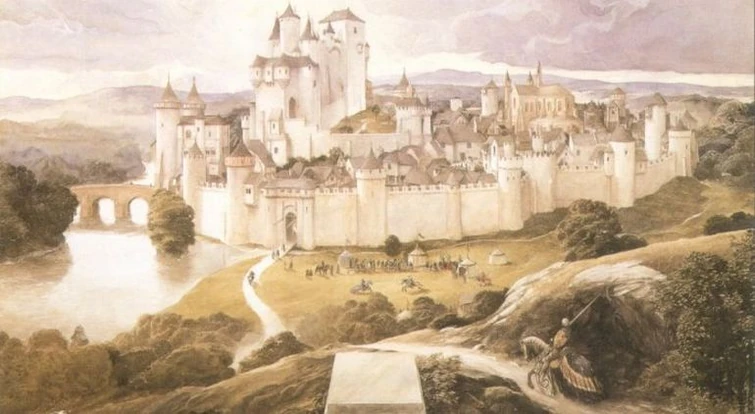
The Starlight Beacon as Camelot came up several times in the essay, largely because the parallels are easily seen. Both are symbols of positive values, with beauty and wondrous design, as well as the prominent use of white and the presence of knights at both locations. Just as it has all of that outward positivity however, a darker side lurks beneath its surface, the station’s industrial underside an apt metaphor for sneaking figures like Mordred, his allies, and the hidden secrets of the knights and others who populate the court.
There is a minor Arthurian knight called Sir Severause / Severauce le Breuse, who is known for rejecting battles with men in favor of fighting giants, dragons and wild beasts after he was forbidden to fight his friend Lancelot. The character’s specific aesthetic of fighting monsters, and the small tie to Lancelot, sounds like the basis for the character of Ty Yorrick, an ex-Jedi monster hunter who forms a connection with Elzar Mann, the Initiative’s Lancelot, at the Republic Fair.
There is a more prominent knight known as Ywain, one of the earliest known to be associated with Arthur, whose claim to fame is possessing a lion as a companion after he rescues them from a dragon. Bell Zettifar is perhaps the closest one could relate to this knight, due to his close companionship with the charhound Ember, a most unusual pet on par with having a lion.
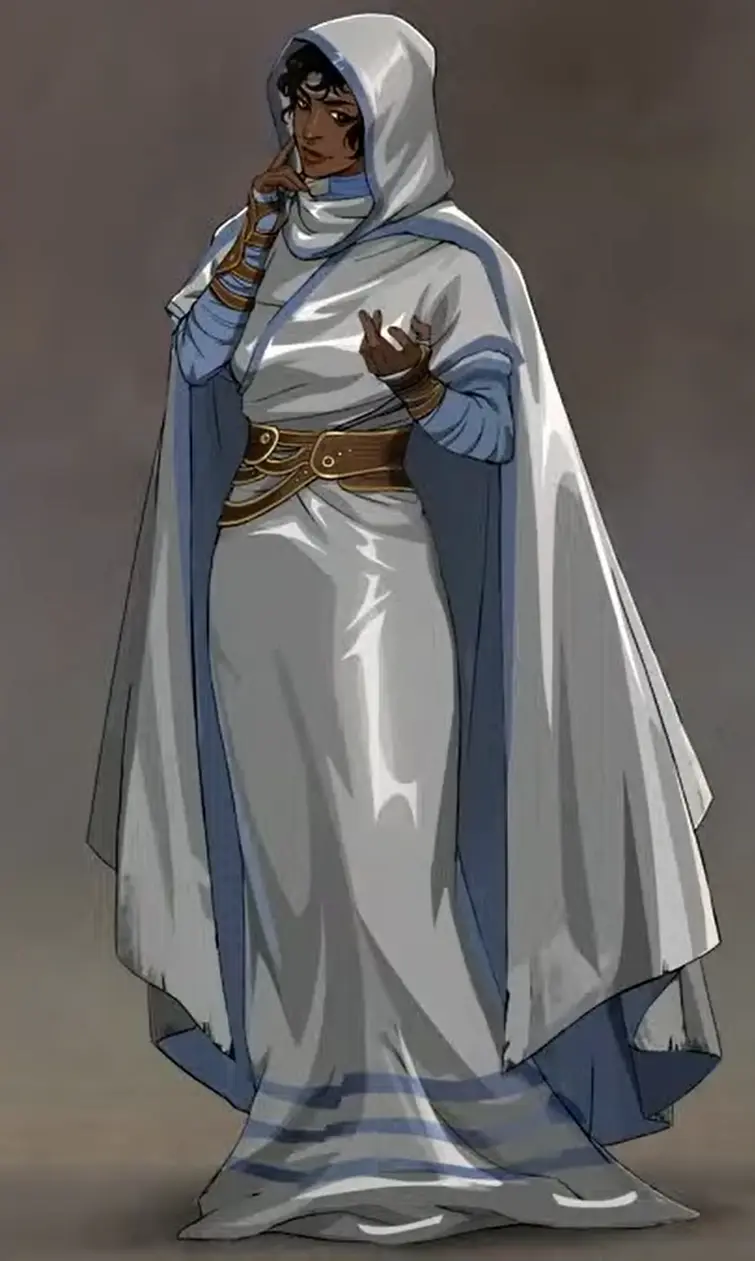
A final idea to draw parallels to is the idea of the White Knight. Many different colors of knight appear across the Arthurian mythos, but the imagery of White Knights is often used for young members of the Table coming in secret to reveal their parentage or skills, a key example being Lancelot, who first arrives at Arthur’s Court as an anonymous White Knight. White is also associated with the Knights of Queen Guinevere, a group of knights who existed to defend the Queen, her honor, and serve as companions. All of this use of white imagery makes one think of the white and gold robes of the Jedi of this era, as well as clothing like the white robes of Orla Jareni. One could even suggest the White Knights may link to the Jedi at the Starlight Beacon itself, separate from those Jedi on Coruscant, where Stellan has his seat, and more actively involved, following the orders of their leader, the parallel to Queen Guinevere.
Conclusion
From the main trio of Jedi which each play a key role in the High Republic, to the villains that they face, it can be seen how broad a brush of Arthurian influence has been taken with these characters. From the earliest depictions, to more contemporary efforts to update the mythos, the High Republic paints a complex picture to be enjoyed by readers and listeners alike. Some who read this essay may find or hear elements of Arthurian stories they have never encountered before, while others may see even more possible parallels I have missed. That is the wonder of the Arthurian mythos and the media which draws from it. Ultimately, I am left excited to see Phase 3 of the High Republic, and how it will continue the parallels to the Arthurian story in a post-Stellan world, with Mordred on the rise.
======
I want to thank all the members of the Wookieepedia forum for reading this, and my prior two essays on the High Republic! I love doing analysis work like this on the connections Star Wars has with the real world, and its mythologies. As a medievalist, the High Republic has been a particular pleasure to examine, given how much it takes from the tropes of Arthur and his surrounding world. I’ll be taking a break from writing pieces like this for a while now, as I let Phase 2 finish in the first half of the new year, but I will still be around so don’t hesitate to tag me in any analysis or fun discussions of the High Republic! Two final things to mention though.
First, I hope that others can find connections between the High Republic and Arthurian tradition that I missed in my above essay. I’d really love to break down and converse over what people might know that I don’t, and points that might let me bring up content I didn’t put in this essay because it would have been a bit much on the structure, or it was too minor a point to mention.
Second, I want to link two excellent videos from Overly Sarcastic Productions which compliment my essay especially well. Both of them are on the Arthurian mythos, with the first having a focus on the main trio as well as the villains, while the second one contains a summary of Gawain and the Green Knight among other tales, if anyone needed or wanted a refresher or more context on my essay:
https://www.youtube.com/watch?v=i_jgF-S746o
https://www.youtube.com/watch?v=nBpkqS68xlk