


Today I'd wanted to briefly discuss two additions to the Star Wars canon in 2023, Inquisitor: Rise of the Red Blade (Delilah Dawson) and Crimson Climb (E. K. Johnston).
Brief content warning for the post as both books include somewhat mature topics, and for heavy spoilers of both books mentioned above.
Often, Star Wars is full of uplifting and hopeful stories in a fight of good against evil, and the eternal struggle between the light and dark sides of the Force. We see this in the Rebel Alliance vs. the Empire, the Republic vs. the Separatists or the Nihil, or any number of other conflicts. I personally however, find gray morality to be where Star Wars as a franchise shines.
Two compelling examples that highlight the complexity of Star Wars storytelling are the narratives of Qi'ra and Iskat Akaris, from Crimson Climb and Inquisitor: Rise of the Red Blade, respectively. There's certainly a time and a place for happy and simple (predictable) stories, but the reality of life is that there's a lot of struggles--both external and internal--that characters will deal with. I find myself always looking for the next piece of Star Wars media to truly make me invested in the characters, to care and to relate to their pain and the hard choices they choose to make.
Iskat Akaris
"I have chosen to free my hearts and soul from the shackles that have held me down for so long. I refuse to bury the parts of myself that I love best. [...] I lived too long under those strict edicts, always feeling like a different animal entirely, repressing my true power so that you would find me acceptable and paleteable. What a waste of a life."
- Iskat Akaris
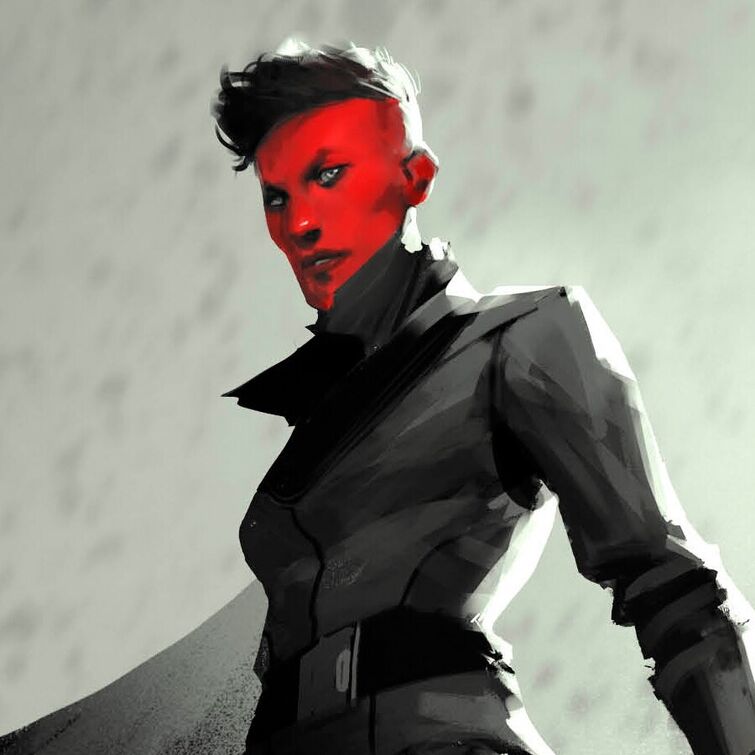
I found Iskat's story interesting. For one, it always seemed implausible that Anakin would be the only Jedi who struggled to fit the mold, especially during the trying times of the Clone Wars. From a moral standpoint, Iskat transforms from a Jedi to an Inquisitor and does her fair share of terrible things in the Empire's name. But, she was a Jedi once, so how did she get there?
There's something to be said about the struggle to try your best but not receive appreciation or recognition for your efforts. Jedi Masters can often choose their Padawans after receiving somewhat of a feeling in the Force. This isn't always the case (Anakin and Obi-Wan, for instance), but, Iskat's Master--Sember Vey--began training Iskat as a promise to the latter's mother, Feyra Akaris, who had washed out of the Jedi Order.
At every turn, we see Iskat try her best to be a great Jedi, but she's paired with a Master who does not share her interests (and actively ignores her student), she's ostracized by her peers from a young age, and she has unresolved anger issues and closure issues. We're left with someone who's very easy for Palpatine to manipulate. When Order 66 occurs and she's given the chance to seek power and be what the Jedi would not allow her to be, why would she not take it? The Jedi were supposed to be the guardians of peace and justice in the galaxy, and in many cases, did a lot of good. But their methods weren't perfect, and often unempathetic; for those overlooked, heartbroken, and unable to find themselves, it can be easier to understand why they'd make the choice to Fall.
Another theme touched on in Inquisitor: Rise of the Red Blade is family. Why would Iskat's Master take on a Padawan she clearly didn't want? The reason turned out to be that Sember Vey had been friends with Feyra Akaris, her mother, and had felt obligated to train her daughter after her friend's death. Feyra too had been considered a "failure" in the Jedi Order--had been a Padawan who washed out, with no other life skills. I imagine it must be world-shattering to be told your entire life you were trained to be something, to then be unceremoniously told you're not good enough, and that you'll be delivered back to your birth family, whom you can't remember. I think the novel does a heavy and sobering job of reminding us that real world issues are sometimes very much present in Star Wars, despite it being a fictional universe.
Qi'ra
"Qi’ra has learned is that teams are for breaking when times get tough. In the end, it doesn’t matter how strong your partner is, because they can’t help you. The only person you can rely on is yourself. Qi’ra takes those lessons with her into the final weeks in the sewers with the Worms and then out into the galaxy with Sarkin before being given the dubious shelter of Crimson Dawn. [...] She knows better. She hasn’t always known better, but she’s learned. And anyone who makes her feel otherwise is dangerous and has to be removed from her life before they can hurt her." - Crimson Climb excerpt

I do enjoy a good story about Jedi and Sith as much as anyone, but Star Wars' offerings that focus on neither (such as Andor, which was amazing) can be just as good. Even within the timeframe of the original and prequel movies, we often deal with individuals very wealthy, powerful, and influential. There's millions, or even billions of others in the galaxy, and the ways these larger power games affect ordinary individuals is something that sometimes isn't considered.
One of the most intriguing characters I personally enjoy in this regard Qi'ra, a survivor in every sense of the word. Han Solo in his younger days is starry-eyed, full of faith that he'll have luck for things to go the right way. Qi'ra learns the hard way that she must do anything to survive, and whether anything she does to survive is considered "moral" is immaterial to her.
While I love Leia as a character-- realistically, she was raised a princess, and was provided with everything she materially needed. Leia does very much learn hardship later on of course, but such idealism is easy to do when not suffering and low on options (this is not said to diminish Leia's devotion to her causes, she is such, but it is important to understand other sides). At the same age, Qi'ra was raised in the bowels of Corellia in the worst of conditions possible--always hungry, fighting everything she owned, and fueled by a desire to live. Qi'ra promises herself very early on that she will survive, no ifs ands or buts. And to echo Tobias Beckett's words to Han Solo, if you don't trust anyone, you'll never be betrayed.
So, Qi'ra claws her way up from enslaved to a nasty individual such as Sarkin Enneb to one of the top lieutenants of Crimson Dawn in three years. Her reality is a harsh one, but by constantly thinking outside the box, thinking ahead--scheming against those who would threaten her, she succeeds. An existence as such is a lonely one; by trusting no one, you have no true friendships or companions. But at the least she achieves her goal: she becomes powerful, she seizes what she wants, and she ends the existences of those who would seek to take such away from her.
Such power allows her to take revenge on whom she likes, in some cases. Often, killing someone is considered morally wrong, and the Jedi certainly strive to not kill unarmed opponents. From the perspective of an individual like Qi'ra, I found that her taking out her former enslavers once she had the power to be quite an empowering moment, though. She did have to do their bidding for some time--to survive, and to live--but they treated her awfully, and such got what she felt they deserved.
Star Wars is slowly getting better about having stronger female character leads. Crimson Climb is a novel largely without Jedi and Sith, and honestly, I quite liked it that way. Her journey is a stark reminder that the galaxy is not always painted in black and white, but rather a spectrum of grays where survival often requires compromise. In an era in which some Star Wars content is repetitive, or somewhat predictable, I felt that (despite the limitations of the novel having to last only three years in length, due to her meeting with Han in the Solo movie) Johnston did an excellent job of making us care. Qi'ra wanted to live and to thrive, despite all odds. It's a testament to her resilience and resourcefulness that she was able to do so. Qi'ra also exemplifies that some individuals don't have any sort of religious or moral philosophy guiding them other than their wishes, so they simply do what they can with the life they have.
Conclusion
"I'm condemned to use the tools of my enemy to defeat them. I burn my decency for someone else's future. I burn my life to make a sunrise that I know I'll never see."
- Luthen Rael
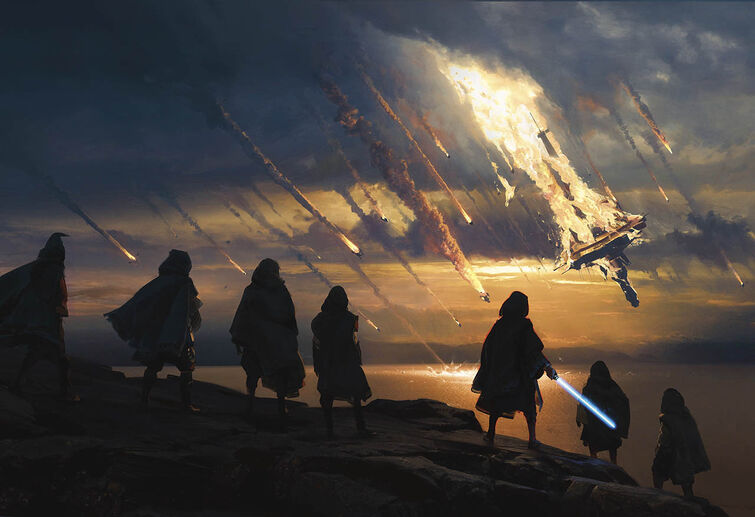
In conclusion, the darker side of Star Wars storytelling is something that I hope we see more of. We see Luthen Rael in Andor willing to do anything to defeat the Empire, morals be damned. We saw Cassian in Rogue One shoot his informant in the opening scenes of Rogue One, to complete his objective no matter the consequence. We see the Nihil genuinely apathetic to millions of people dying in the Eriadu system and destroying Starlight Beacon.
Characters like Qi'ra and Iskat provide a nuanced and thought-provoking exploration of the moral complexities within the galaxy and what can drive people to do what they do. These tales challenge traditional notions of heroism and villainy, inviting audiences to contemplate the shades of gray that exist in the vast and expansive Star Wars universe.
Here's to hoping 2024 treats us to some good, emotionally-provoking additions to the canon!