

✍ ESSAY CONTEST ENTRY
(See link to vote)
I: Introduction

"The Sith'ari will be free of limits
The Sith'ari will lead the Sith and destroy them.
The Sith'ari will raise the Sith from death and make them stronger than before." -The Sith'ari prophecy, as recorded by Sorzus Syn in her journal
The Sith'ari is a subject not nearly as often touched upon in Star Wars as the Jedi prophecy of the Chosen One. But for most things of the light side, there is an equivalent in the darkness: Force powers, individuals—prophecies were no exception.
The Chosen One prophecy is stated by Jedi vs. Sith: The Essential Guide to the Force to be 1,200 or more years old at the time of the Star Wars movies, though it could be much older.
On the other hand, the Sith'ari prophecy is documented by Sorzus Syn, one of the Jen'jidai and an original Sith Lord on Korriban as far back as 6,900 BBY. The journal in which the prophecy was written about was included in the Book of Sith. Even before this, however, the Sith King Adas was believed to be the Sith'ari as early as centuries before 27,700 BBY. However, the promise of a Sith'ari continued through the generations of Sith, until 4 ABY when Darth Sidious was killed and Darth Vader redeemed. Malak, Ruin, Bane, Plagueis—all these Sith believed themselves to be or were believed to be the Sith'ari.
This begs an explanation of how each Sith could be the Sith'ari, and, after the analysis, a summary of who exactly the Sith'ari was.
II: King Adas
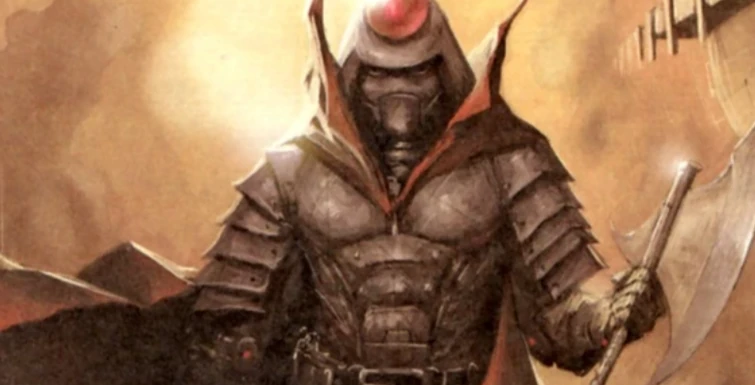
King Adas of the Sith Worlds was one of the few Sith Kings who was able to unite the various tribes of Sith across Korriban and the other worlds. Adas was a great warrior who wielded a pair of axes that even the most hulking Massassi could only brandish one of.
Adas was encased in a suit of armor, and he was a fearsome warrior. In 27,700 BBY, Adas—who had ruled by fear for years, uniting all under him with just the fear of his voice—led his people against the Infinite Empire. The Rakata attacked Korriban, being a strong dark side nexus and a natural point of expansion.
However, unlike many other species, the Sith fought back. They captured Rakatan technology and battled the Rakata from Korriban. But their planet was devastated in the attack, Adas was slain, and the Sith fell into civil war for millennia until the reign of Dathka Graush. Adas is remembered as one of the greatest Kings of Korriban ever to live, and he did unite the Sith and lead them to victory—but they fell into chaos as soon as he died.
III: Darth Andeddu

Known as the first user of the Darth title, Darth Andeddu was an ancient Sith Lord who was also known as the Immortal God-King of Prakith. Hailing hailed from the Deep Core world of Prakith, Andeddu unlocked the secrets of the essence transfer power, enabling Sith to transfer their spirit into another body.
Later Sith like Darth Vitiate and Darth Sidious would use this technique multiple times, which Andeddu pioneered. However, Andeddu, like all other Sith, became paranoid that his followers would fight him for his power. Eventually, after fleeing his followers and forming a cult known as Malevolence, he sealed himself away in his tomb.
Andeddu's holocron would be unearthed many different times by many different individuals. Beings such as Freedon Nadd, Darth Bane, Quinlan Vos, and Count Dooku would all be involved with Andeddu at some point, until the Sith Lord faced Darth Wyyrlok III defeated him in a duel of wills in his tomb, ending his hopes of life and resurrection.
Andeddu, though initially promising, fell into paranoia and became a mad God-King worshiped by a mysterious cult, and ultimately died in disgrace.
IV: Darth Revan
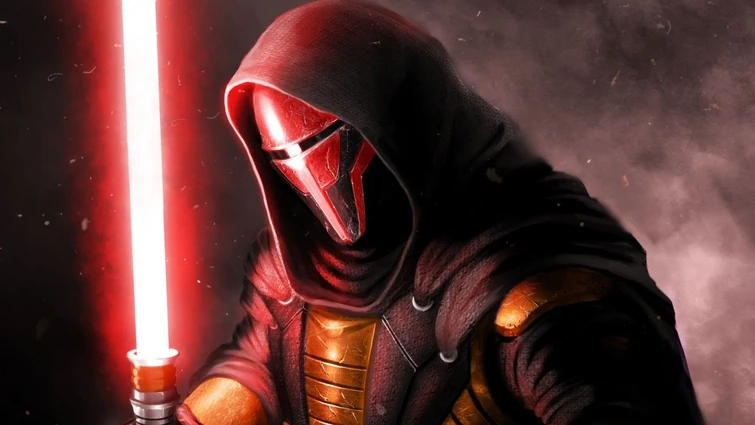
Darth Revan was a powerful Dark Lord of the Sith, but nevertheless, simply a pawn. After a career as a Jedi Knight fighting in the Mandalorian Wars and the victory at Malachor V, he journeyed to Dromund Kaas, attempting to infiltrate Darth Vitiate's citadel and end the threat of the True Sith Empire.
However, Revan had already fallen into darkness.
The Sith Emperor dominated his mind, sending him back to the Republic as their greatest threat, to weaken them, to test the Jedi's strength. Revan nearly brought the Republic to his knees, but like all other Sith empires, the paradox of the Sith Order led to Darth Malak betraying his Master, Revan, and usurping the throne of the Sith Empire.
Revan returned as a servant of the Jedi, defeating Malak. Eventually, he developed a greater understanding of the Force. He once again tried to kill the Sith Emperor, but was captured. However, he succeeded in holding off the True Sith for another 300 years, preventing the Great Galactic War from taking place in his son's lifetime. Eventually he would return as the revered deity of the Revanites, and cause both the Republic and True Sith Empire to unite and destroy him before he could resurrect Darth Vitiate.
Revan, despite the belief that he was the Sith'ari, was merely a pawn in the Sith Emperor's dejarik game. And the Sith Emperor, as shown by his draining of Nathema and murder of hundreds of Sith Lords simply to aid him in his maniacal quest for eternal life, was most definitely not the Sith'ari, either.
V: Darth Malak

Darth Malak was a powerful Sith Lord who served alongside Revan until he usurped him and took over the Empire. Like Revan, Malak was merely Vitiate's pawn. He attempted to use the Star Forge to conquer the Republic, only to be defeated by his old Master.
In the end, Malak wondered if there was truth in his old Jedi teachings, and died without having much of a lasting impact on the galaxy. While Malak was indeed powerful, he was, in terms of being a possible Sith'ari, a "dud."
VI: Darth Malgus
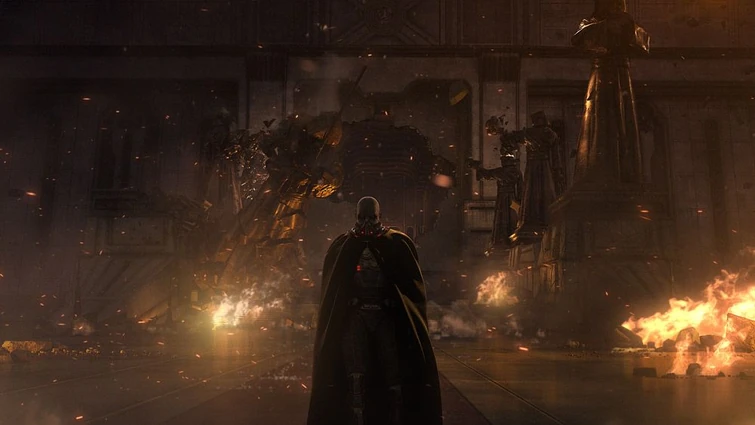
Darth Malgus was a powerful warrior of the True Sith Empire during the Great Galactic War. He carried out the Sacking of Coruscant, murdering Jedi Master Ven Zallow, and survived horrendous injuries by future Grandmaster Satele Shan that caused him to wear an imposing respirator for the rest of his life.
Malgus was not a being like Adas or Andeddu; he was not a mythological figure who was regarded as a perfect being—he was simply a great warrior.
Malgus's prowess in battle could not be denied. Satele Shan was a powerful Jedi Master, who he fought and survived against multiple times, and he killed her Master years before that, Kao Cen Darach.
However, though he was a tremendous Sith warrior, he was not the Sith'ari; he did try to start his own Sith Empire, but the attempt failed, firmly reinforcing the idea that he cannot be the perfect being foretold by the ancient Sith. If he had truly been the Sith'ari, he would have been able to break away from other, theoretically weaker Sith and form his own Empire based around the perfect beliefs of the dark side of the Force.
VII: Darth Ruin

The Fourth Great Schism was sparked by one man: a Jedi named Phanius. Rather than overtly becoming a follower of the dark side, he pursued a more individualistic philosophy while remaining within the Jedi Order. He had gathered much notoriety, helping him sway other Knights to his cause. He boldly claimed that he should come before anything else in the galaxy, adopting the "creed of Ruin."
"There is no passion…there is solely obsession.
There is no knowledge. There is solely conviction.
There is no purpose. There is solely will.
There is nothing…
Only me."
Phanius broke away from the Jedi Order, bringing about fifty Jedi with him. He took on the name of Darth Ruin, Dark Lord of the Sith, becoming one of the last known Sith to use the Darth title before Darth Bane circa 1,000 BBY.
Ruin united various clans of surviving Sith, declaring war on the Republic. The New Sith Wars would continue for about a millennia after Ruin's demise, led by Ruin, the Dark Underlord, various Sith Lords, and Skere Kaan before the Seventh Battle of Ruusan ended 1,000 years of conflict between the two Force-sensitive religions.
Ruin's selfishness ultimately led to his own downfall, his followers become angered with him and assassinating him to continue the crusade against the Jedi without him.
VIII: Darth Bane

Darth Bane was the first Sith since Darth Ruin to use the Darth title, defying the Brotherhood of Darkness, the Sith government in power, to do so. He believed that Lord Kaan's philosophy was too Jedi-like, and that the Sith should never be equal.
He destroyed the Sith by convincing a mentally deteriorating Kaan to use the thought bomb, trapping the entire Brotherhood and a few Jedi inside an orb of energy in a cave system on Ruusan for millennia.
Bane rebuilt the Sith, creating the Order of the Sith Lords and the Rule of Two, proclaiming that there should only ever be two Sith at a time: one to embody power and the other to crave it.
He took on an apprentice named Zannah, thereby finishing his work in creating a new Sith Order. Eventually he was killed by his apprentice and all went according to his plan until Plagueis and Sidious emerged from the shadows to form the Galactic Empire nearly 1,000 years later.
IX: Darth Tenebrous

Darth Tenebrous was a Bith scientist who used science to manipulate midi-chlorians, even experimenting with maxi-chlorians, variants of their original cousins.
He trained Darth Plagueis, formulating the Sith Grand Plan that would culminate in Order 66 and the Empire. However, beyond the planning of the events of Revenge of the Sith, Tenebrous did little to further the Sith goal, and was simply, like countless Sith in the Banite line, setting up those who would follow him.
He was killed during a cortosis mining operation by Plagueis in 67 BBY on Bal'demnic, and from there, the Sith began to ascend the galactic hierarchy as Hego Damask and, eventually, Senator Sheev Palpatine of Naboo.
X: Darth Plagueis

Darth Plagueis the Wise was the Dark Lord the Sith immediately following his Master, Tenebrous. He believed Tenebrous's methods of using the Force to be incorrect, and vice versa, reaching what he would later describe to his own apprentice, Sidious, as a "philosophical impasse" with his Master.
After ending his Master's life on Bal'demnic, Plagueis created a vast network of contacts and allies, using people like Sate Pestage and the Maladian assassins to kill or aid various people across the galaxy. He recruited Palpatine, a young noble from a wealthy House on Naboo, and manipulated him carefully into murdering his entire family. Then he trained him in the art of subtle manipulation in turn, and together, they masterminded the downfall of the Galactic Republic, planning Dooku's fall, the Naboo Crisis, and Order 66.
Plagueis did inherent the unorthodox element of Tenebrous's Force wielding, seeking to use midi-chlorians on a whole new level. Eventually, he exerted such an influence over the organelles that he could command them to do whatever he pleased, including to kill their host, as demonstrated in the case of Ars Veruna, a former Naboo monarch who destroyed Plagueis fortress on Sojourn.
Eventually, Plagueis journeyed to Korriban, seeking the secret of how Sith spirits lived on after death. None appeared to him until he was about to board his ship, when the ghost of Marka Ragnos taunted him, challenging him for the mantle of Dark Lord but refusing to answer Plagueis's own questions. The Muun dismissed it as a trick of the mind.
When Sidious surpassed his Master, Plagueis's flaw became more apparent: he was obsessed with eternal life. He had sought to end Bane's Rule of Two by living on forever through the manipulation of his own midi-chlorians, but this ultimately failed when Sidious killed him in his sleep, unceremoniously ending the life of a master manipulator and powerful Sith Lord.
XI: Darth Sidious

Darth Sidious, the final Sith who believed himself to be the prophesied savior of the Order, was recruited by Darth Plagueis as a teenager and manipulated into murdering is family, assuming control of House Palpatine and become the Senator of Naboo. He, with Plagueis advising him from the shadows, rose to the position of Supreme Chancellor, carrying out Maul's training and causing the Naboo Crisis.
Eventually, on the night before Sidious's assured election as Chancellor, he murdered Plagueis in his sleep with wave after wave of Sith lightning, assuming control of the Republic while secretly becoming the Sith Master and taking Dooku on as his apprentice. He caused the Clone Wars, and, eventually, Order 66, giving rise to the reign of Emperor Palpatine of the First Galactic Emipre. He manipulated Anakin Skywalker, the Jedi's Chosen One, into becoming the catalyst, changing him into Darth Vader and sending him to carry out the Great Jedi Purge at the Temple on Coruscant with the aid of the 501st Legion of the Republic's own clone army.
Palpatine ruled for years with an iron fist until his downfall at the hands of the Jedi Chosen One, Darth Vader, and his son, Jedi Knight Luke Skywalker. Palpatine did return several times in clone bodies, but his Dark Empire was destroyed before it could expand far beyond the Deep Core and its throne world of Byss.
XII: To Lead and Destroy
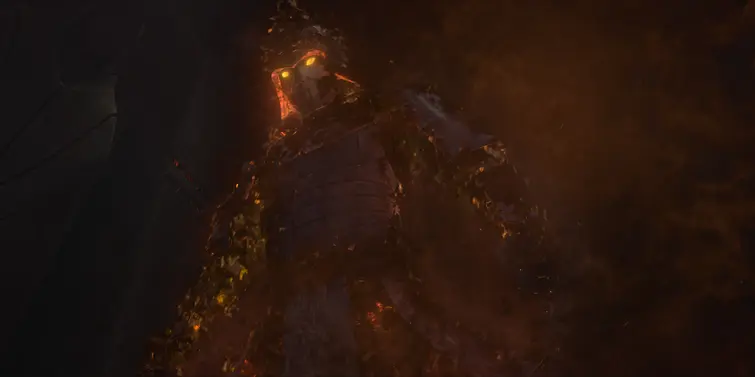
All of these Sith did change the Order in some way, and they were all significant in the lore of Star Wars—after all, think how many Sith Lords existed during the era of the New Sith Wars that were simply never mentioned. Anyone who is talked about by name is significant within the galaxy compared to the trillions of unnamed beings, and these Sith were the most influential of this top group.
However, the entire concept of this essay begs the question, "Who was the Sith'ari?"
I think it's safe to say that there's only one viable option: Darth Bane. This is because of one key tenant of the prophecy that rules out any other Sith on this list: "The Sith'ari will lead the Sith and destroy them."
Darth Bane obviously led the Sith; so did many other Sith on the list that was compiled here. But to destroy the Sith is something only one did. Bane wiped out the Brotherhood, his fellow Sith, in order to build the Sith philosophy from the ground up.
He went through the trouble of destroying every single Sith in the galaxy so he could rebuild the Order of the Sith Lords. He, in the words of Syn's documented prophecy, "rose the Sith from dead and made them stronger than before."
The Sith'ari had to meet the criteria of every line of the prophecy. For example, Darth Sidious ruled the Sith, but didn't destroy them. Plagueis destroyed the Sith philosophy of the Rule of Two (or attempted to) but never got the chance to lead them in the open. Adas, despite the fact that his death ripped apart Sith society, never actually destroyed the Sith to rebuild them.
Darth Bane did.
XIII: Free of Limits
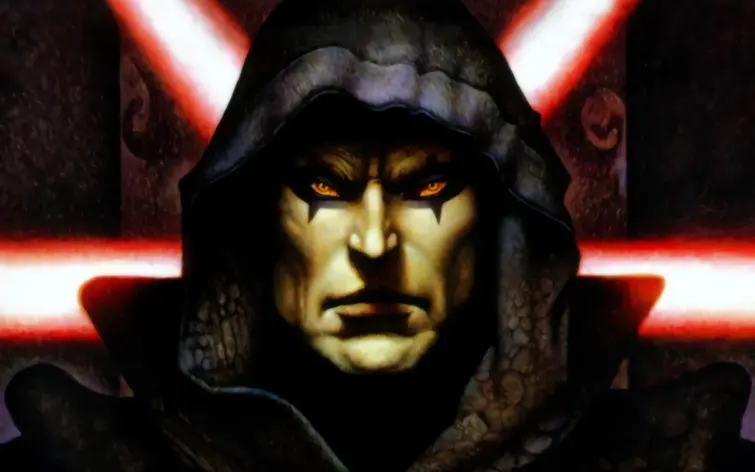
The most curious line of the prophecy is, without a doubt, "The Sith'ari will be free of limits." In the words of Darth Plagueis, such prophecies are often wishful thinking. This could have all been a prophecy merely conjured up by the Kissai (the ancient Sith priests) as a mythological figure, someone to look forward to the coming of, like the way that the Jews saw the concept of the Messiah arriving at the start of the New Testament of the Bible.
The reason I say this is because no Sith is free of limits. Like the Jedi, they are shackled by one thing or another. For the Sith, this is usually infighting, however, Bane didn't have this problem due to the Rule of Two that he created. But Bane would have had to have literally unlimited power to be completely free of limitations, One could also think of specific things that Bane lacked—for example, his attempt at an essence transfer failed, and Bane thereby lacked eternal life.
However, perhaps only this line was wishful thinking, and other parts of the prophecy were wrong. There's even the slimmest chance that Sorzus Syn translated the prophecy incorrectly from the ancient Sith tongue, and it was somehow wrong or missing words. Prophecies in Star Wars are enigmatic things that we may never know that much about, with different interpretations and possible answers, which is why characters like Anakin Skywalker are such hot topics.
Sorry if the analysis of the individual Sith Lords was unnecessary or long-winded. I included it to provide examples of those who claimed to be yet were not the Sith'ari, to give contrast to the example of Bane.
May the Force be with you, Wookieepedians. Always.


