

✍️ ESSAY CONTEST ENTRY
(see link to vote)
Introduction
One of the most defining moments of the sequel trilogy comes in The Rise of Skywalker, when Kylo Ren reveals to Rey that she is a Palpatine. He tells her that “You don’t just have power. You have his power”. However, this revelation also brought controversy, as many interpreted this as ruining Rey’s character since her power, and by association her agency, is not her own but relies on her bloodline.
Here, I examine the nature of the Force as it relates to Rey, and demonstrate that Rey’s power and importance are not centered on her bloodline, but from the choices she makes based on the solitude she experienced on Jakku, and the internal conflict that arrises from being a descendant of Palpatine.
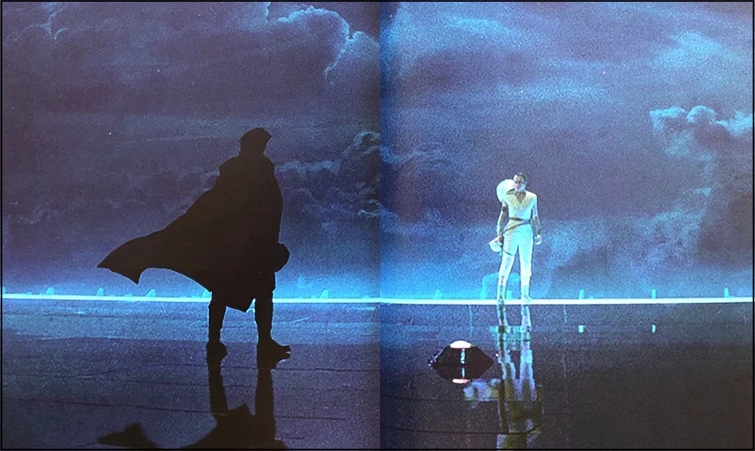
At a pivotal moment in the sequel trilogy, Kylo Ren tells Rey that she is Palpatine - “You don’t just have power. You have his power.”
What does “his power” really mean?
The two words from Kylo Ren’s line in The Rise of Skywalker that carry the most significance are “his power”. At the surface, this is a simple explanation for Rey’s abilities that are shown throughout the sequel trilogy. She is revealed in The Force Awakens to have considerable power from the Force. Therefore, linking this strong Force ability as coming from Palpatine, one of the saga’s strongest Force users, explains this paradox, as well as her importance.
But, what did Kylo Ren really mean by “his power”? Given the nature of the Force, a ubiquitous energy field created by life that binds the galaxy together, Kylo Ren was not necessarily suggesting that the power that Rey has is from Palpatine, but it is the power that Palpatine craves. It is the same power that he has been unnaturally taking from the Force for generations. In other words, The power that Palpatine has does not belong to him, and it is not his to pass on to others. That power ultimately belongs to the Force (see Figure 1), as Luke tells Rey in The Last Jedi, “That Force does not belong to the Jedi” (or anyone else).
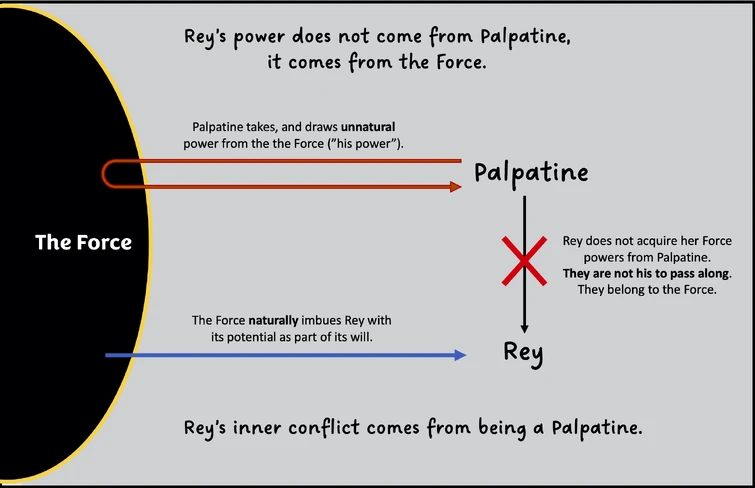
Fig. 1 - A illustration of how Rey’s Force potential comes from the Force, not Palpatine.
Therefore, Rey cannot (and does not) acquire her Force power directly from Palpatine. Instead, The Force naturally imbued Rey with its potential as part of its will, a reaction to Palpatine corrupting the natural balance of the Force through unnatural means, likely due to his manipulation of the Force for his own immortality, and the corruption of Ben Solo through Snoke.
Consequently, Rey’s importance, and by association her agency, is not influenced by the power that is “his”, or her bloodline. Rey’s power comes from the will of the Force, and, in practice, is hers. Moreover, character agency in fiction is not about one’s power (or from whom or where it comes), it is about a character’s ability to act on his or her motivations to make choices that direct the story in a meaningful way.
So for Rey, her prime motivation, which fuels her agency (and importance), is derived from her life experiences on Jakku, something that is solely hers. As established in The Force Awakens, the first movie of the trilogy, Rey grew up alone on a desert planet left to fend for herself. Yet, despite the hardships of her youth, she remained determined to find her belonging, her family, no matter what it may be.
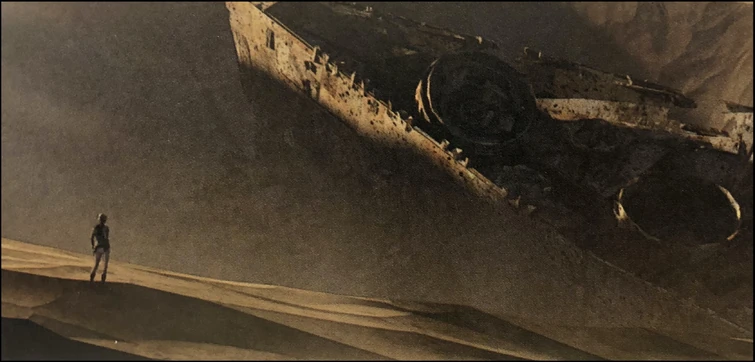
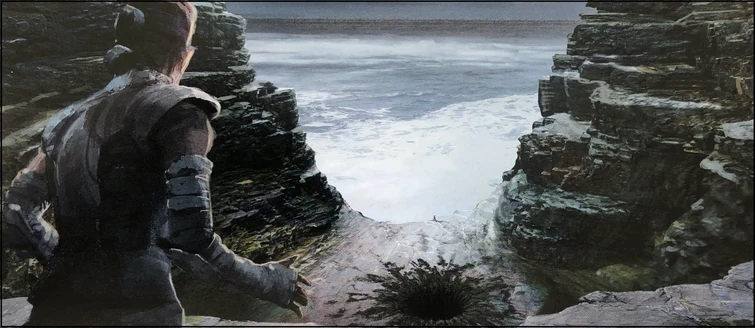
Rey’s solitude on Jakku helped drive her motivation to find her belonging through family.
It is that inner drive that steers her agency (her ability to make meaningful choices to the story) and generates her importance as a character, and does not change based on her bloodline (“famous” or not).
What does being a Palpatine bring to Rey’s character?
So if bloodlines don’t determine Rey’s importance, then why is she a Palpatine at all? Most simply, it provides context to her motivation, and an appropriate internal conflict that is meaningful to the larger story. For example, Rey’s arc is not about Rey finding her independence (she’s done that her whole life already on Jakku), or showing that she does not need anyone but herself to be fulfilled (which would support her being a “nobody”).
Instead, Rey’s arc is focused on finding her belonging as it relates specifically to family. Therefore, Rey being a Palpatine integrates this base motivation as part of her larger destiny as a Jedi (e.g., “Some things are stronger than blood”), and its meaning is more consequential in the context of the entire Skywalker Saga. Without an in-world context to her motivation, Rey’s character becomes unidimensional, and more of an audience self-insert that does not fit in her world (see here).
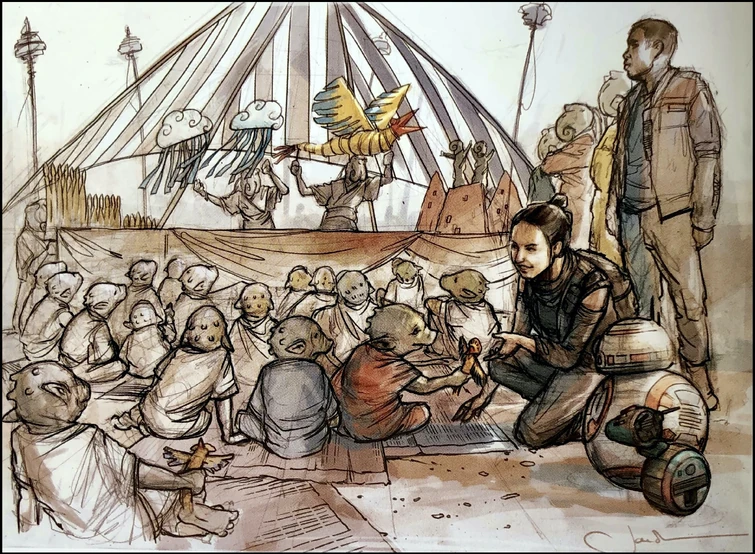
Rey interacting with young Aki-Aki on Pasaana. A sense of belonging through others drives Rey’s character.
Rey’s Palpatine genetics
Although Palpatine (nor anyone else) can not own or directly pass Force power to another person, that does not mean that genetics don’t play a role in giving Star Wars characters relatable tendencies, or family nuances that are Force-related. For example, throughout the sequel trilogy Rey can be seen struggling with an involuntary drift to the Dark when she accesses the Force (e.g., Rey and Kylo Ren’s duel on Starkiller Base, during Kylo Ren’s interrogation of Rey, with Luke on Ach-To, and her venture into the Mirror Cave), as well as having difficulty controlling her anger (e.g., her training on Ajan Kloss, and shooting Force lighting from her hand on Pasaana).
All of these behaviors, and the speed at which they come, are interesting to examine through the lens of inherited characteristics that are Force-related, and, indeed, can be seen as part of her bloodline as a Palpatine.
Being a Palpatine integrates and connects Rey’s character into her world. Her genetics primarily serve to give her character in-world nuance as she experiences involuntary drifts to the Dark.
However, these attributes only serve to give context to Rey as a Palpatine throughout the sequel trilogy (and help tie it together), and reinforce her as a character in the Star Wars universe. However, they do not set or define her importance as a character, only the significance of Rey’s choices can do that.
Conclusion
The Force works in mysterious ways in Star Wars. To assume that its power belongs to anyone or that it can be predictably passed from one person to another (i.e., bloodlines) deviates from the Force’s core meaning.
It is fitting that the characters most obsessed with bloodlines in Star Wars like Snoke, when he says “The potential of your bloodline. A new Vader”, and Palpatine, who unsuccessfully tried to imbue his son (Rey’s father) with Force power, can never predict the Force’s outcome successfully. Even when Luke says “The Force is strong in my family”, he does not suggest that he understands why.
So, Kylo Ren’s line to Rey “You don’t just have power. You have his power.” is no different. Rey’s power ultimately comes from the will of the Force, and, in practice, is her own. It is not a direct consequence of her Palpatine bloodline. Consequently, Rey’s importance is not driven by her bloodline, but from the choices she makes as a character, by (1) rejecting that same bloodline as part of her destiny as a Jedi, and (2) finding her belonging through family that was motivated by her inner conflict from being a Palpatine and the solitude she experienced on Jakku as a child.
Acknowledgements
All of the artwork in this post is from “The Art of Starwars” books.


