
🥇 ESSAY CONTEST WINNER
Introduction
Rey begins her hero’s journey as a young girl abandoned on a remote planet. She lives her life alone, watching the world move around her. But like all heroes, in order to be a part of her world, she needs to be connected to it. Here, I discuss various views concerning Rey’s lineage, how they effect my view of her character, and why I ultimately enjoy Rey’s character as a descendent of Sheev Palpatine.

Rey grows up alone, waiting to find her place in the world.
Rey as a Nobody
Despite The Force Awakens setting up Rey’s character to have a genealogical connection to someone in the Star Wars Saga, The Last Jedi made Rey “a nobody” by making her parents “filthy junk traders”, and, thus, her lineage irrelevant to the story. Although this designation is appealing (more on that below), what this does within the narrative of The Skywalker Saga is turn Rey into a superhero - a nobody with crazy powers that becomes the hero that everyone needs her to be (like a Superman or Wonder Woman).
And in effect, this removes her character from the Star Wars universe. She no longer has to interact with it, or with its members, in order to grow and move the story along. For example, in The Last Jedi Rey visits Luke on Ahch-To seeking guidance, but when Luke refuses, she can largely ignore him, and, instead, can do whatever she needs to do herself, without anyone’s help. Why? Because she doesn’t need help, she is effectively a “Star Wars superhero” who can save the day on her own. This is great for audience empowerment, but lacking when it comes to enriching in-world narratives.

A combination of Rey being a nobody, having incredible powers, and on her own becoming the champion that is needed, effectively turns her character into a superhero.
Nonetheless, I believe that this “superhero disconnect” comes from a good place. It is an attempt to make Rey, who is the first female Jedi protagonist in a Star Wars movie, strong and independent to appeal, in particular, to younger female viewers (which is awesome). However, these otherwise positive traits (whether a male or female character possess them), when combined with the Force in Star Wars and the revelation that a character is a “nobody” who on his or her own becomes the hero that people need them to be saturates the character, and, paradoxically, makes the character seem less human and more superhuman. Consequently for Rey, it removes her from the larger narrative, and she no longer has any meaningful stakes tied directly to her world. She is simply there to help the good guys win.
The Force is still cosmopolitan
One of the main appeals of Rey being a “nobody” is that it supposedly demonstrates that anyone can use the Force, and you don’t have to be from a powerful bloodline to be a hero. This line of reasoning is noble, and its appeal obvious, but it similarly comes from a superhero-oriented mindset (as well as various contemporary socio-political schools of thought). For example, modern themes concerning the character Spiderman are that “anyone can wear the mask”, which is a wonderful and empowering theme, but, when this concept is co-opted with the Force in Star Wars it becomes redundant - The Force in Star Wars has always been cosmopolitan.
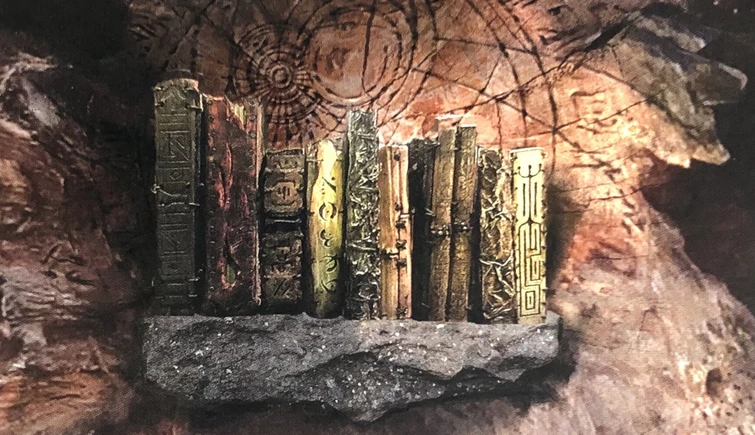
The Force in Star Wars has never been relegated to “mighty bloodlines”. Its power, and the wisdom gained from it, have always been for everybody.
The Force has never been specifically relegated to “powerful bloodlines”. In its simplest terms, it is an energy field created by all living things that sentient beings can feel and utilize to varying degrees. George Lucas created Midi-chlorians as a means to quantify potential “Force sensitivity”, but how these traits are passed through generations is largely unknown. Sometimes it can appear to follow blood lines, and many times it does not. But in the end, the Force in Star Wars has always been for everyone.
Therefore, “greatness” among characters in Star Wars has never really been defined by their bloodlines, but from the choices they make. They follow the basic theme of the Everyman - characters to whom all can relate regardless of where they come from. So for Rey, then, having a recognizable lineage in the context of The Skywalker Saga does not define her “greatness”, but serves to ground her character.
Rey as a Palpatine
In The Rise of Skywalker, it is revealed that Rey was a nobody because her parents wanted her to be, they purposely hid her on a remote planet for her safety. She is the granddaughter of Sheev Palpatine, and she needed to be protected. Moreover, Leia and Luke both knew of this (more on this below). This, admittedly, was a surprising narrative turn. It required rethinking the events of the previous two movies. However, what it did for Rey’s character was make her part of the story. Rey is now a character that comes from arguably the worst place in the Galaxy (so to speak), and she, and the people around her, now have to contend with this. Her narrative now has legitimate in-world stakes that are meaningful, and tied to the events surrounding her. Rey no longer is a “superhero” character participating from the outside and looking in, but is now intertwined with, and connected to her world.

Rey is a naturally kind and hardworking person, abandoned as a child for her safety. She wants to help and know her place in the world. However, unknowing to her is an unconscious drift that occurs when she begins to access the Force.
For example, Leia and Luke both knew that Rey was a Palpatine, but when? It seems that Leia knew of this from before the events of the The Force Awakens, where they first meet onscreen. During that scene, Leia reacts to Rey as if she knows her. And in fact, in 2016 after the release of The Force Awakens, J.J. Abrams said this about their first meeting:
“The idea being that both of them being strong with the Force and never having met, would know about each other — that Leia would have been told about her beyond what we saw onscreen and Rey of course would have learned about Leia. And that reunion would be a meeting and a reunion all in one” (J.J. Abrams, ABC News)
So although Abrams did not have Rey written as a Palpatine at that time, the intent of the scene is clear - Rey was someone of consequence and Leia knew of her. Consequently, their embrace in that scene now carries more meaning, and this event now drives the narrative of the trilogy more deeply by suggesting that Leia is willfully entrusting Rey, a descendent of Palpatine, with finding Luke. It shows Leia’s grace, and, in turn, her faith in her brother. Leia is also consigning the future of this possibly volatile girl to Luke. So when Leia wishes Rey “May the Force be with You” as Rey leaves in the Millennium Falcon to Ahch-To at the end of The Force Awakens, it has weight and the stakes are set.

Leia knew Rey was a descendant of Palpatine. This deepens their first onscreen meeting in The Force Awakens, and sets the stakes for rest of the trilogy.
Likewise, the scenes in Ahch-To from The Last Jedi (mentioned previously) now convey an expanded perspective, and similarly allow for Rey’s narrative to carry a deeper consequence. For example, it is clear that Luke does not know who Rey is when she first arrives at Ahch-To, likely because he has closed himself off from The Force. However, from the scenes when Luke is training Rey, Luke can be seen putting the pieces together about who Rey is, and, when he reconnects with the Force in the Jedi temple before Rey leaves (and links with Leia), it is confirmed.
But more significantly, Luke learning the truth about Rey enriches the conflict with which he is already struggling - namely, that Luke believes he has failed Ben Solo, and now he is confronted with the dilemma of training a descendent of Palpatine. Consequently, when Rey attacks Luke from behind, and they scuffle, it brings with it a deeper meaning. And, with the help of Yoda, who tells Luke “Lose Ben Solo you did. Lose Rey we must not”, Luke must realize that Rey is not a product of her past, but with help (e.g., looking past a pile of old books), she can forge her own path, as Leia always believed.

After struggling with the failure of losing Ben Solo to the Dark, Luke is faced with challenge of training Rey, a descendant of Palpatine (top). This inner conflict culminates when Luke discovers Rey and Kylo Ren (Ben Solo) are communing through the Force (bottom).
Rey’s Parents (The Missing Piece)
In The Rise of Skywalker, we see Rey’s parents. In an emotional scene, they are able to hide Rey on the planet Jakku before they are taken and killed for not revealing Rey’s location. Although no details are disclosed about them in the movie, Rey’s parents also play a pivotal role in tying Rey’s character to her world, and increasing her importance to the story. Additionally, it opened new narrative possibilities concerning the role Rey’s parents played, considering Leia knew of Rey’s identity. Moreover, Palpatine having descendants deepens his lore as well, particularly during the years of Episodes I - III, as he would have become a father during this time.
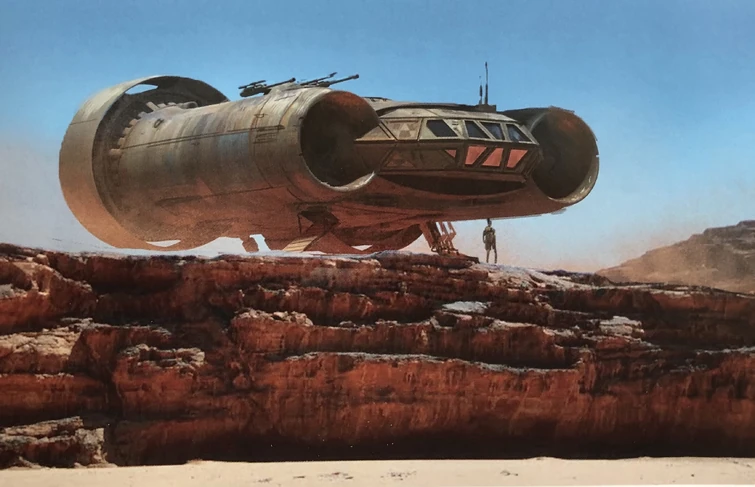
The ship where Rey’s parents were killed in order to keep her safe. Their complete story remains to be told, but Rey’s parents’ inclusion in the story strengthens Rey’s overall narrative.
Unfortunately, in the novelization of The Rise of Skywalker, Rey’s father was made to be a clone of Palpatine after Palpatine was killed in Return of the Jedi. This clone “son” was inexplicably normal, escaped from one of the most hidden planets in the Galaxy, and, somehow, met someone and fathered Rey. This is admittedly a stale and uncreative narrative decision, given the available possibilities. However, novels are only considered Canon in Star Wars “where they align with what is seen on screen” (Wookieepedia). Therefore, since there is no reason to believe that Rey’s father is a clone in the movie (this does not align with what is seen on screen, and the novelization simply appropriated the concept of the Sith Eternal clone tanks that were meant to explain Snoke), there is a legitimate argument to be made as to the weight the novelization carries (i.e., the novelization is filler).
There are many narrative possibilities for Rey’s parents, but they must rest on the basic story that Sheev Palpatine conceived a child at some point during the Prequel Era. Consequently, I believe a more meaningful story concerning Rey’s parents are a missing piece to fully complete her story.
Force Dyad (Rey’s Myth)
The Rise of Skywalker reveals Rey and Ben Solo to be part of a Force dyad - two physical bodies that share one Living Force. The concept is derived from Joseph Campbell’s works, which include the ideas behind the modern monomyth, and represents Rey’s (and Ben Solo’s) contribution to the Star Wars mythos. Campbell references the dyad as a union, a “marriage” of two bodies. And in Star Wars, Rey and Ben, therefore, are inextricably bound as a single unit in the Force.

Rey and Kylo Ren (Ben Solo) are part of a Force dyad. Rey being a Palpatine and Ben a Skywalker thematically complement the two halves of this union in the Force.
This symbolism is thematically resolved with Rey as a Palpatine. For example, Ben Solo (a Skywalker) and Rey (a Palpatine) represent the two main lineages of The Skywalker Saga, and the two contrasting aspects of the Force itself. However, what makes their union as a dyad unique, is that Ben comes from the Light but chooses the Dark, while Rey comes from Dark and chooses the Light. This interconnection compliments one of the overarching themes of sequel trilogy - the maintenance of balance. Luke even contemplates in The Last Jedi that “for many years there was balance”. Therefore, The Rise of Skywalker asks “how is balance preserved?”, and proposes that “it takes a village”, the community of the Galaxy, to overcome its challenges. This theme is also carried through with the Force with concept of “all the Jedi”. Therefore, with the Force dyad, it is as if the Force itself is manifested as one, attempting to achieve balance through the two most contrasting, yet intertwined, lineages of the Skywalker Saga, a Skywalker and a Palpatine.
So, it is only when the two opposing facets resolve, a Skywalker returns to the Light and a Palpatine controls the Dark, as an equally complimentary unit in the Force, that balance can be maintained and preserved for future generations. By the end of the Saga, Rey embraces this as her new role, and, accordingly, accepts the Skywalker name as a symbol of hope, and as an ambassador to the Skywalker Legacy.

Rey is a symbol of overcoming your past, and choosing your own path through unity and maintenance of the Force.
Conclusion
Rey is a uniquely positioned character in Star Wars. She represents the vision of multiple writers, and, therefore, can be interpreted in many different ways (often drawing much contention in the process). Even so, I don’t believe that a choice has to made. Here, I argue why I enjoy Rey as a descendant of Palpatine - because it grounds her character and allows her to be part of the story in way that enriches the lore. However, I don’t believe that this negates any positive attributes that people see in her character if she were a “nobody”. She will always be Rey, and a character that, I believe, offers a unique and enriching role to the Star Wars Saga.
Further Reading
Here are other posts I have written that examine Rey as a Palpatine that may be of interest:
Rey channels the dark during her duel on Starkiller Base
Rey channels the dark during Kylo Ren’s interrogation in The Force Awakens
The Mirror Cave from The Last Jedi - An Interpretation
Acknowledgements
Whether the positions were positive or negative, I would like to thank all the great users here that have helped me shape my views on Rey. There are many of you, and you probably know who you are. Cheers!
All of the artwork from this post comes from “The Art of Star Wars” books.


